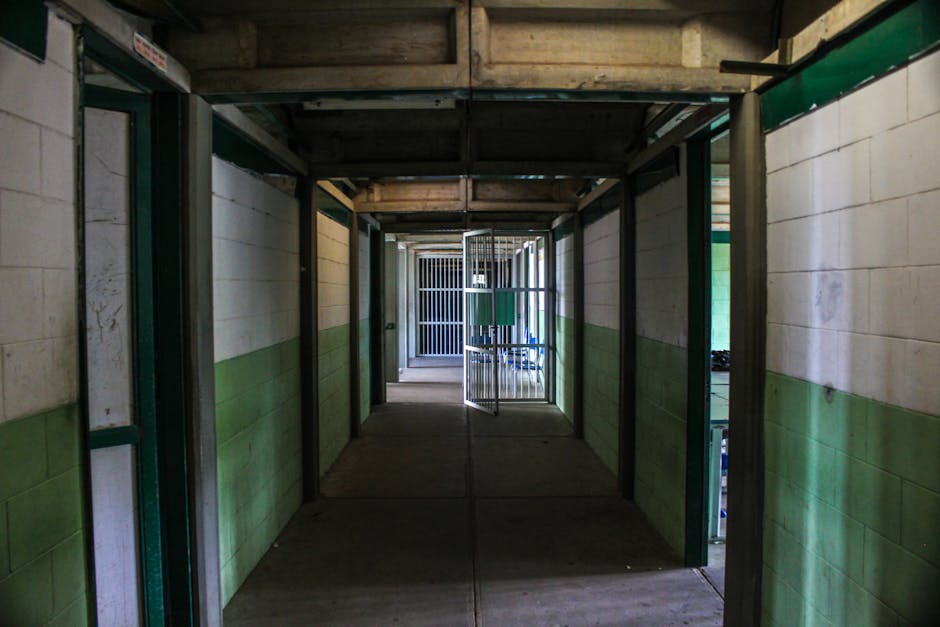
Malik Jordan is fictional. But the prison that holds him — the conditions, the years that became decades, the invisible toll — those are real. This page exists because great fiction doesn't just move you. It asks you to look.
— RR Henley, Author
What incarceration takes
The families. The children. The years.
When a person goes to prison, an entire constellation of relationships fractures with them. Children grow up without a parent. Partners grieve someone who is still alive. Parents age alone. The damage does not end at the cell door.
In Cedar Hollow Promises, Malik missed his son Jalen's entire childhood. Jalen died in December 2021 never having spent a single real day with his father. That loss is not a plot point. It is what happens when a system prioritizes punishment over restoration and forgets that the collateral damage has names.
“I missed his whole life. His first words. His first bike. Every birthday party where I wasn't there. That's not punishment for what I did. That's something else entirely.”
— Malik Jordan, Cedar Hollow Promises
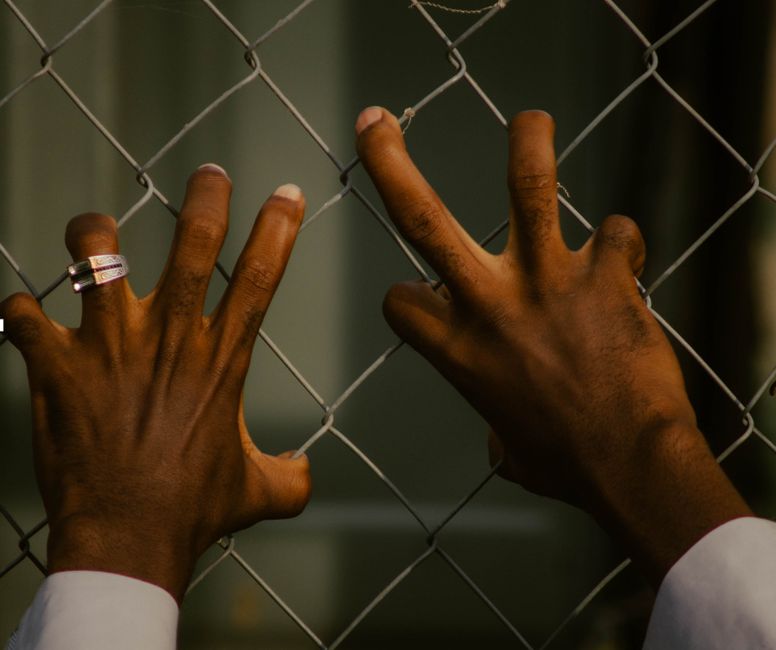
The Invisible Grief of Incarcerated Families
Families of incarcerated people carry a grief that has no name. There are no grief rituals, no community support structures. The person is still alive — just unreachable. Children of incarcerated parents face higher rates of trauma, academic struggle, and mental health challenges. The sentence extends far beyond the person who receives it.
Prison as Inherited Trauma
Research consistently shows that children with incarcerated parents face significantly increased risk of incarceration themselves — not because of genetics, but because of systemic abandonment. When society punishes a parent, it often sentences the child to an invisible secondary punishment: poverty, disrupted schooling, and stigma.

Unsafe by design
When the institution becomes the violence
The United States incarcerates more people per capita than any nation on earth. Alabama — the state where Cedar Hollow Promises is set — has among the most overcrowded prison systems in the country. Alabama prisons are consistently running at more than 180% of their designed capacity. Understaffing means violence goes unsupervised. Solitary confinement is used as a management tool rather than an extreme last resort.
These are not isolated policy failures. They are the result of decades of political decisions that treated incarceration as a solution rather than a symptom.
Solitary Confinement
Isolation for 22–24 hours a day — sometimes for months or years — causes severe psychological damage. Medical and human rights organizations widely classify prolonged solitary as a form of torture. In Alabama and across the U.S., it remains routine.
Understaffing Crisis
When correctional facilities operate with 40–60% of required staff, violence becomes uncontrollable. Inmates are left without oversight, without protection, and without recourse. Staff are also placed in impossible conditions. Everyone inside loses.
“The violence I saw in there — it wasn't random. It was what happens when you put too many people in too little space and tell the guards there's nothing they can do about it.”
— Malik Jordan, Cedar Hollow Promises

Thirty years. Still inside.
He has not been released. The world has moved on without him.
Malik entered prison in 1996. It is now 2026. Thirty years. When he went in, the internet was barely public. There were no smartphones, no social media, no gig economy, no digital banking, no GPS. The world he knew no longer exists — and no one inside has prepared him for the one that does.
His release date is uncertain. That uncertainty is its own punishment. He cannot plan, cannot prepare, cannot tell Lena or anyone else when to expect him. He exists in permanent suspension — a man waiting for a door that may open next year or may not open for another decade.
“I don't know what I'm going home to. I don't even know what 'home' looks like out there anymore. I just know I've been in here long enough that everything I knew is gone.”
— Malik Jordan, Cedar Hollow Promises
Thirty Years of Disappeared Technology
When Malik was convicted, email was a novelty. When he gets out, navigating a city, finding housing, applying for a job, managing a bank account — all of it will require tools and systems he has never touched. The prison system will hand him a bus ticket and expect him to figure out a world that rebuilt itself while he was locked away.
The Cruelty of Not Knowing
Indefinite or uncertain sentences impose a unique psychological toll. You cannot set goals. You cannot prepare for a future you cannot picture. You cannot grieve the years in chunks because you don't know how many are left. Long-term incarcerated people describe this ambiguity as one of the most corrosive aspects of confinement — a horizon that never arrives.
Designed to Dehumanize, Not Prepare
The word 'rehabilitation' implies the system is trying to restore something. But the daily reality of incarceration — arbitrary authority, stripped identity, overcrowded conditions, chronic violence — does not prepare people for life. It prepares them for more incarceration. The system was not built to return whole human beings to society. It was built to punish.
The Background Check That Never Ends
Even after release, the sentence continues. Housing applications, job applications, educational loans — every door has a checkbox: "Have you ever been convicted of a felony?" After thirty years inside, Malik will walk out with no employment history, a record that surfaces on every background check, and a job market that has entirely transformed. The punishment extends indefinitely beyond the walls.

A different model
Accountability without erasure
Restorative justice asks a fundamentally different question than the current punitive model. Instead of "How do we punish this person?" it asks: "What harm was done? Who was harmed? What needs to happen to repair that harm — and how can the person who caused it be part of that repair?"
Cedar Hollow Promises is, at its core, a story about this question. Malik has spent thirty years being punished — and the sentence is not over. The novel asks: was anyone healed by that? Was Lena healed? Was Kiki healed? Was Cedar Hollow healed? Or was everyone simply more broken — and growing older in their brokenness — while Malik grew older inside?
What Restorative Justice Is
A process that brings together those who caused harm and those who were harmed — with trained facilitators — to acknowledge what happened, understand impact, and build a path toward genuine accountability and repair. It is used in schools, communities, and as an alternative or supplement to criminal prosecution.
What Restorative Justice Is Not
It is not 'soft on crime.' It is not forgiveness on demand. It does not minimize what happened or protect perpetrators from consequences. It asks more, not less — genuine accountability requires facing the people you harmed, not just serving time in a building they never see.
“I thought doing the time was the atonement. I was wrong. Doing the time was just... time passing. Atonement is something else. Something you have to do on purpose.”
— Malik Jordan, Cedar Hollow Promises

Featured Organization
Alabama Prison Reform Proposal
The ALPRP works to address the systemic failures in Alabama's prison system — one of the most overcrowded, underfunded, and dangerous in the United States. Their work focuses on legislative reform, facility standards, reentry support, and the human dignity of those inside Alabama's correctional facilities.
Cedar Hollow Promises is set in Alabama. Malik Jordan has been held in an Alabama prison for thirty years — and the release date remains uncertain. The ALPRP is doing the real-world work that this novel points toward. Supporting them is one way the story becomes action.
Visit alprp.org →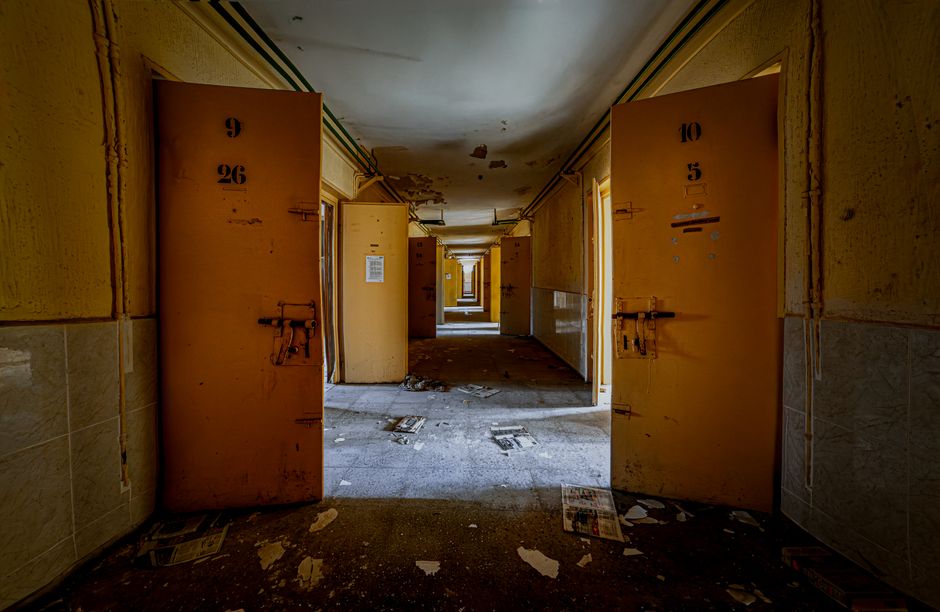
A note from the author
Fiction is not enough
I wrote Cedar Hollow Promises because I needed to understand what it cost — really cost — to love someone across a thirty-year absence that isn't even over yet. I needed to understand what Malik carries inside that place. What was taken from him. What can't be recovered. And what he will face on the other side of a door that hasn't opened.
The part that wouldn't leave me alone: he's not prepared. The system didn't prepare him. It wasn't designed to. It was designed to punish — to hold a person in conditions that strip away agency, identity, and dignity for as long as the sentence runs. And then it opens a door and hands him a bus ticket and calls it justice.
But the longer I sat with this story, the more I felt the weight of writing it without saying, clearly, that what Malik experienced is not fiction. The overcrowding is real. The violence is real. The families disrupted, the children raised without fathers, the years that become decades and keep becoming decades — that is the lived reality of hundreds of thousands of people in this country, and disproportionately in the South, and disproportionately in Black communities.
This page is my attempt to honor that reality. To not let the novel be only beautiful and tragic and contained. To say: here is where the story comes from. Here is what it points toward. And here are people doing something about it.
— RR Henley
From Fiction to Advocacy
The story continues.
Outside the page.
Learn more about the Alabama Prison Reform Proposal. Read their work. Share this page. The most powerful thing Cedar Hollow Promises can do is send you somewhere real.
Visit the Alabama Prison Reform Proposal →Cedar Hollow Promises · K&R House Press · A novel by RR Henley
Statistics sourced from Bureau of Justice Statistics, Prison Policy Initiative, and ACLU research.
Photography via Pexels. All images used under Pexels License.