
Meet the
Characters
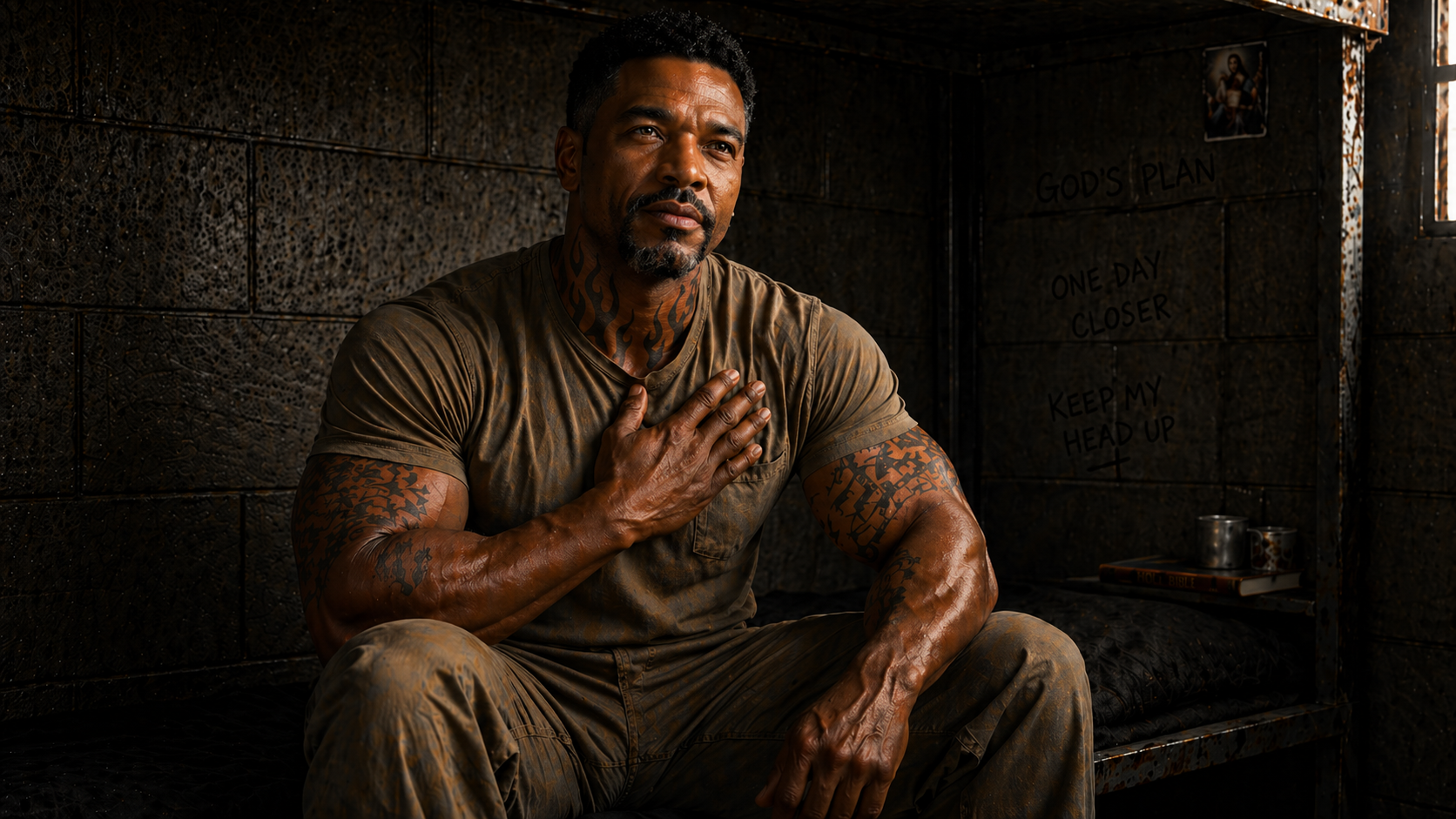
Behind the walls.

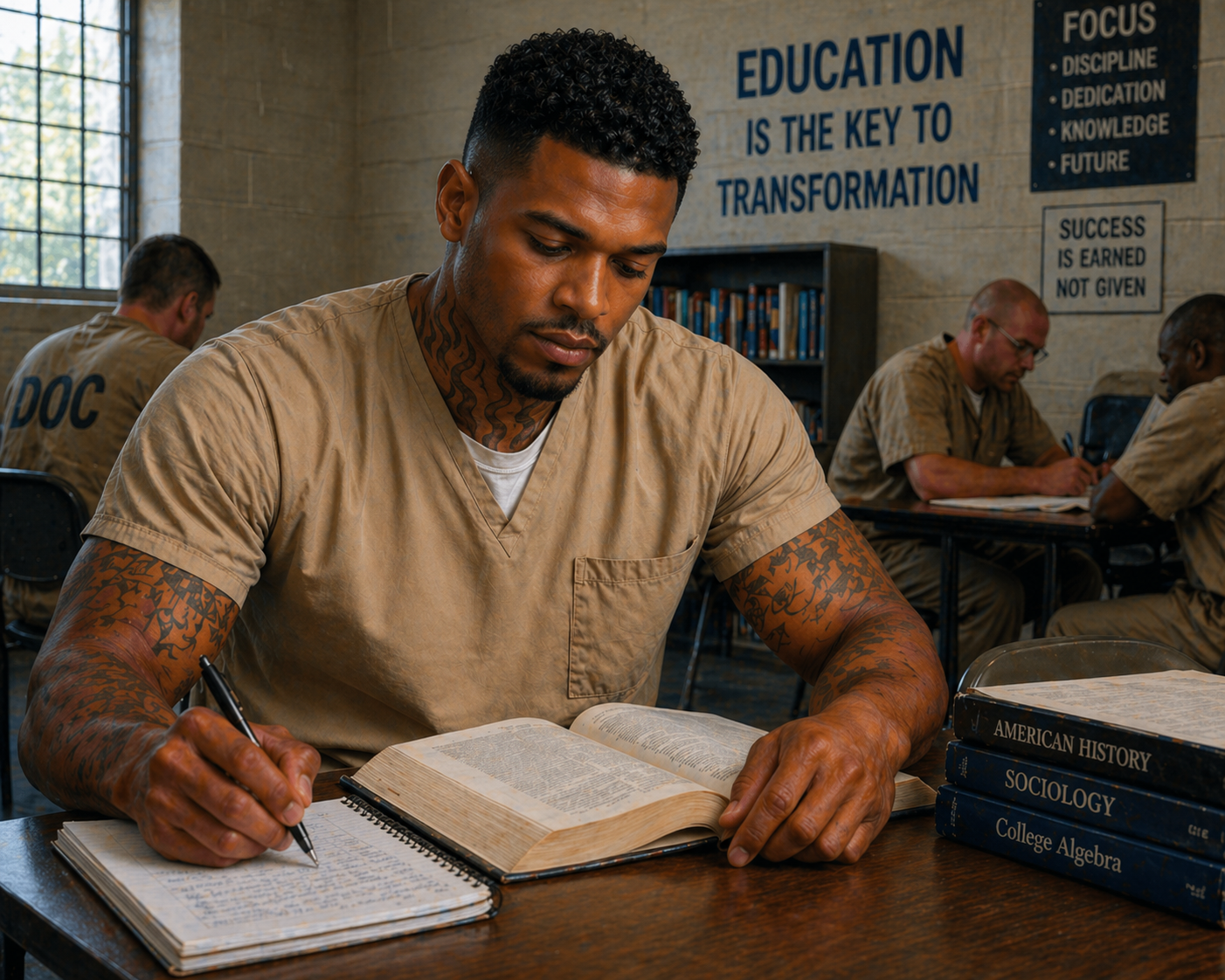
Rebuilt from within.
The man who must become what he once destroyed.
“He learned the hard way that remorse isn't punishment — it's a life sentence you either grow from… or drown in.”
Malik Jordan was twenty-one when he let his rage make a decision he could never take back.
He did not stumble into it. He did not misunderstand the moment. He chose — in the heat of something ancient and uncontrolled inside him — and the consequences swallowed the next two decades of his life whole.
Prison did not break Malik.
It exposed him.
Behind the walls, he became a man of discipline — reading, training, working, studying. He earned certifications, built routines, and learned to sit with the full weight of what that decision had cost. Not to escape it — but to face it without flinching, every single day.
Because Malik does not deny his past.
He carries it.
His greatest conflict is not the system that confined him, but the truth that follows him home: that he chose destruction once, deliberately, and lives in the shadow of that decision without end.
He loves deeply — but not easily. Trust, for him, is earned through consistency, not words. And even then, he questions whether he deserves what he's been given.
Where Lena chooses grace, Malik wrestles with worthiness.
He does not ask to be forgiven.
He asks to become the kind of man forgiveness would recognize.
What makes Malik compelling is not redemption promised — but redemption pursued, imperfectly, relentlessly, and without guarantee.
Because for him, love is no longer something to take.
It is something he must prove he can carry without breaking again.
Eighteen, magnetic, carrying a restlessness he hadn't yet learned to control
A moment of unleashed rage with consequences he never imagined — and cannot undo
Compounding wrongs, consequences, incarceration, and the long reckoning
Two decades of rebuilding from the inside — faith, education, integrity
SouthKing74. One message. Everything he has, offered without guarantee

Before the promises broke.


Summa cum laude.

Stronger always.
The woman who chooses grace.
“She carried her faith the way she carried her children — both hands, full commitment.”
Lena was sixteen the summer Malik Jordan stepped onto Marla's porch. Even then, she possessed something rare — a quiet, unshakable strength most people spend a lifetime trying to build.
She would go on to earn a presidential scholarship, graduate summa cum laude in computer science, and build a life defined by discipline and sacrifice. She followed her husband through military life, raised three children, survived violence, and carried responsibilities that never seemed to loosen their grip.
But Lena's strength was never just in what she endured.
It was in what she refused to let harden her.
Where others might have grown bitter, Lena chose faith — deliberately, repeatedly, even when it contradicted what she felt, even when it cost her peace.
She understands something most people avoid: forgiveness is not freedom — it is a burden you choose to carry.
What makes Lena extraordinary is not her resilience. It is her willingness to confront the truth beneath it:
That love does not erase the past.
That faith does not remove doubt.
And that choosing grace may require her to risk everything she built to protect herself.
First meeting, first desire, first betrayal
Years of building a life under pressure
Choosing to reconnect with Malik — at great risk
Arriving, slowly, at a forgiveness that costs everything
He rebuilt himself
from the inside out.
Books became his rebellion.
Discipline, his religion.
Accountability, his reckoning.
She built a life
without forgetting.
Degrees earned. Children raised.
A marriage survived, then ended.
A faith held, though tested.
Two lives.
Running parallel.
One thread still holding.
The Years Between
Character Growth Journey
The Beginning
Sixteen, in love, and betrayed for the first time.
Eighteen, magnetic, carrying a restlessness that would one day cost everyone everything.
The Years Between
Marriage, motherhood, survival, and the slow erosion of safety.
Dangerous choices led to incarceration in 1996. Learning discipline. Building something inside the walls.
The Reconnection
Cautious, guarded. Allowing possibility back in, inch by inch.
Reaching out as SouthKing74. Hoping the fire was still there.
The Reckoning
Choosing grace. Choosing herself. Choosing, finally, what she deserves.
Earning redemption through honesty, accountability, and staying.
The Supporting Cast
No character in Cedar Hollow is simply backdrop. Each life intersects Lena's and Malik's in ways that altered everything.
Aunt Marla
Marla is the fixed point around which Cedar Hollow turns. Her porch is where Lena grew up and where Malik first appeared — eighteen, magnetic, and unaware of what he was walking into. She is the keeper of things that don't get spoken directly, the woman who hands you a journal and says: every woman needs a place to put the things she can't say out loud.
Marla watches. She does not judge. And she is always, quietly, right.
Darius
Darius served his country and came home a different man than the one who left. He is not a villain — he is what happens when trauma has no language and love has no tools. He lit candles. He made dinner. He said, I love who you're becoming — and meant it with everything he had left.
The complicated truth about Darius is that his pain was real and his harm was real, and both things are true at once. Cedar Hollow Promises refuses to let the reader look away from that.
Kiki
What Kiki did at the old mill in the summer of 1992 set everything else in motion. She did not think of it as betrayal. She thought of it as correction.
She was wrong in a way that cost two lives their shape. But she was seventeen, and she was in love with someone who loved someone else, and that is not an excuse — it is a fact that the story refuses to simplify.
Trey
Trey grew up shoulder-to-shoulder with Malik in Cedar Hollow. He is the kind of loyalty that shows up without being asked. He watched the fall from close range and stayed anyway — through the arrest, through the years, through the slow return.
He carries his own guilt about the night everything changed, and he has never quite figured out where to put it.
Tanisha
Tanisha is old enough to see what her mother is doing and young enough to still be shattered by it. She grew up knowing something was wrong in her parents' house without ever having a name for it.
When Malik re-enters her mother's life, Tanisha becomes the character the reader sees themselves in most clearly — the daughter who loves her mother and is terrified of what love is asking her to accept.
The Witness
The Witness is not a character in the conventional sense. It is the observant presence that moves through the story seeing what the characters cannot — the undercurrents, the things unsaid, the shape of choices before they are made. Poetic. Inexplicable. Often the only voice telling the truth.